
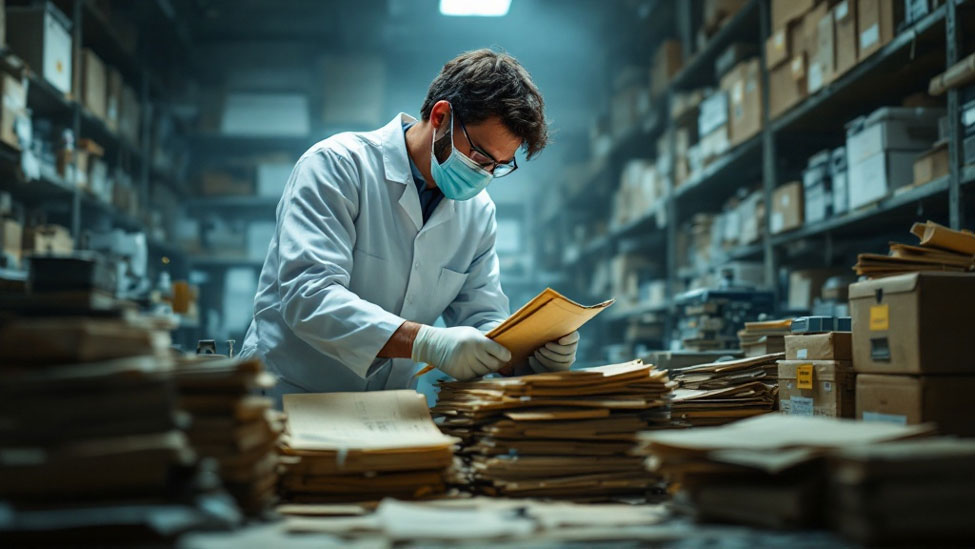
Cold cases often remain legally unresolved for decades due to the challenges of aging evidence and early investigative limitations. Today, the process of re-examining aged evidence with modern fingerprint imaging is giving forensic analysts and examiners a powerful second chance—and new hope for investigators and families.
The Challenge of Aged Evidence
Environmental stress, improper storage, repeated handling, and poor packaging degrade fingerprints and obscure crucial details. On porous materials such as paper, prints may survive longer, whereas glass or metal surfaces typically show greater degradation with time, particularly if exposed to humidity and light. Every forensic specialist understands the need to preserve original integrity, starting from evidence collection best practices and continuing throughout every stage of analysis.
The Examiner’s Approach to Cold Case Prints
A certified latent print examiner follows the ACE-V methodology—analysis, comparison, evaluation, and verification—as also recommended by AAFS and IAI. Experienced examiners meticulously determine if enough ridge detail remains to support identification or exclusion, and forensic analysts reassess previously overlooked or partial prints for new comparison opportunities. Each result is verified by a second examiner, in line with NIST best practices to ensure objectivity.
Modern Fingerprint Imaging for Cold Cases
Recent advances provide examiners and analysts with transformative techniques:
Benefits of Updated Analysis for Investigators and Courts
Documented, chain-of-custody compliant workflows mean new insights can refute outdated theories, eliminate or identify suspects, and move cold cases a step closer to closure. See our comprehensive guide to documentation and DOJ guidelines to learn more. Forensic specialists maintain transparent records so newly developed leads are sustainable for legal proceedings.
Collaborative Efforts in Cold Case Re-examination
Successful reviews demand cooperation: an analyst may prepare and image evidence, another enhances digitally, and an examiner conducts evaluation and final comparison. External forensic science authorities and ongoing education from organizations like IAI help ensure that new methods remain reliable.
Cold Case Success Stories
In one cold case, advanced digital imaging clarified a once-unreadable print. Comparison by an examiner established the link needed to reopen the investigation. In another, sequential chemical processing developed a hidden print on a document, resulting in a courtroom-accepted identification. Each case underlines how technology and expertise can breathe new life into old evidence.
Best Practices for Cold Case Fingerprint Re-examination
Conclusion
Re-examining aged evidence with modern fingerprint imaging is now a critical component in the cold case toolbox. Forensic analysts and examiners at Nikoui & Associates, supported by cutting-edge imaging and international protocol, ensure that every potential print is thoroughly analyzed and defensible in court.
About the Author
By Kourosh Nikoui | 09/25/2025 | Forensic Science
Kourosh Nikoui is the Principal Consultant and CEO of Nikoui & Associates, Forensic Identification Services & Consulting, Inc., a court-qualified expert and certified latent print examiner with over 40 years of field experience. Mr. Nikoui has testified in hundreds of cases, processed over 30,000 pieces of evidence, and is credentialed by the International Association for Identification. Contact at (866) 439-6753 or [email protected]. Learn more: www.nikouiandassociates.com.