

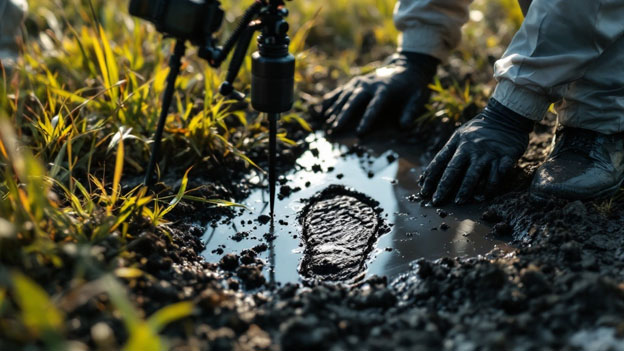
Footwear evidence often becomes one of the most valuable forms of impression evidence at a crime scene. A properly recovered footwear impression can place a suspect at a location, establish movement patterns, and connect individuals to multiple scenes. However, successful footwear analysis depends heavily on terrain conditions and recovery techniques. Forensic investigators, footwear examiners, and forensic specialists must adapt their methods to urban, rural, and wet environments to preserve impression evidence effectively.
The Importance of Footwear Evidence
Footwear impressions can reveal shoe size, tread design, wear patterns, and movement direction. In some cases, impressions also contain unique accidental characteristics that individualize a shoe to a specific wearer.
Unlike fingerprint evidence, footwear impressions are frequently exposed to environmental damage. Wind, rain, vehicle traffic, and pedestrian movement can destroy critical details, making immediate recovery and documentation crucial.
Proper evidence handling remains essential to prevent contamination. Gloves must always be used during recovery, and even careful handling can damage fragile impression evidence if proper procedures aren’t followed.
Footwear Evidence in Urban Environments
Urban crime scenes present special challenges. Examiners often encounter impressions on concrete, tile, scattered objects on floors, doors, window seals, and heavy traffic increases the risk of destruction. Footwear examiners should secure the area and limit foot traffic near the impression.
Comprehensive photographs—overall, midrange, and close-ups—must be taken before any attempt to lift or process the print. Oblique side lighting can improve visibility of shallow tread detail. Electrostatic dust print lifters and gelatin lifters are effective in urban settings.
Urban scenes may also involve surveillance video analysis for movement reconstruction.
Footwear Recovery in Rural Environments
Rural environments produce different challenges. Dirt, sand, and vegetation can preserve detailed impressions, but they’re highly vulnerable to weather or animal activity.
Soil stability should always be assessed before recovery begins. Start with high-resolution digital photography using evidence scales for size reference. Night or low-light scenes may require professional cameras and strong strobe lights.
Casting is valuable in these settings, with dental stone preferred for detail. Weather—such as rain, sun, or wind—can rapidly erode evidence, so immediate protection and documentation are essential.
Footwear Evidence in Wet Environments
Mud, water, snow, and wet grass present some of the most difficult conditions for footwear recovery. Movement or vibrations near wet impressions can destroy detail, so approach with caution and consider protective tents or tarps.
Use polarizing filters and angled lighting to control glare in field photographs. Document from different perspectives. Specialized aerosol wax or fixatives may be needed to stabilize muddy or snowy impressions before casting.
For packaging, never seal evidence until it is dry—trapped moisture can damage detail and encourage degradation.
Preservation, Documentation, and Training
Proper documentation and packaging determine courtroom success. Always maintain a thorough chain of custody, keeping evidence in labeled, non destructive containers. Interdisciplinary teamwork—among crime scene investigators, analysts, and photographers—further strengthens outcomes.
Digital enhancement software can clarify tread features, but any adjustments must be documented for authenticity.
Effective footwear evidence recovery requires specialized training in photography, casting, comparison, and evidence preservation—and experience in every terrain.
Conclusion
Footwear evidence remains a powerful investigative tool when properly recovered and preserved. Each environment calls for special techniques—from rapid protection in urban settings, to careful casting in rural scenes, to stabilization in wet conditions. Investing in proper training, equipment, and disciplined recovery procedures improves both evidence quality and investigative outcomes.
If you need expert consultation or analysis, contact Nikoui & Associates for professional, court-defensible forensic services.
About the Author
Kourosh Nikoui, BFA, CLPE, CSCSA, CFPH
Principal Consultant and CEO, Nikoui & Associates
With over 40 years of full-time experience in forensic science and criminal justice, Kourosh Nikoui is a Certified Latent Print Examiner, Certified Senior Crime Scene Analyst, and Certified Forensic Photographer by the International Association for Identification. Mr. Nikoui has processed evidence in over 30,000 criminal and civilian cases and testified as an expert witness more than 150 times in California Superior and U.S. Federal Courts. He has served as a consultant to numerous law enforcement agencies and legal teams across the nation, specializing in forensic identification, crime scene analysis, forensic photography, evidence processing, and expert testimony. Learn more about Nikoui & Associates.